Nietzsche dijo, «Dios ha muerto». Luigi Zoja agregaría, si Dios ha muerto, también ha muerto el prójimo porque es la concepción de Dios que nos une y nos hace una gran familia humana.
La modernidad y la posmodernidad arrojan luz sobre la orfandad de la humanidad. Si no existe Dios, nosotros no tenemos Creador y mucho menos un Padre. Quedamos como huérfanos ante el misterio del cosmos.
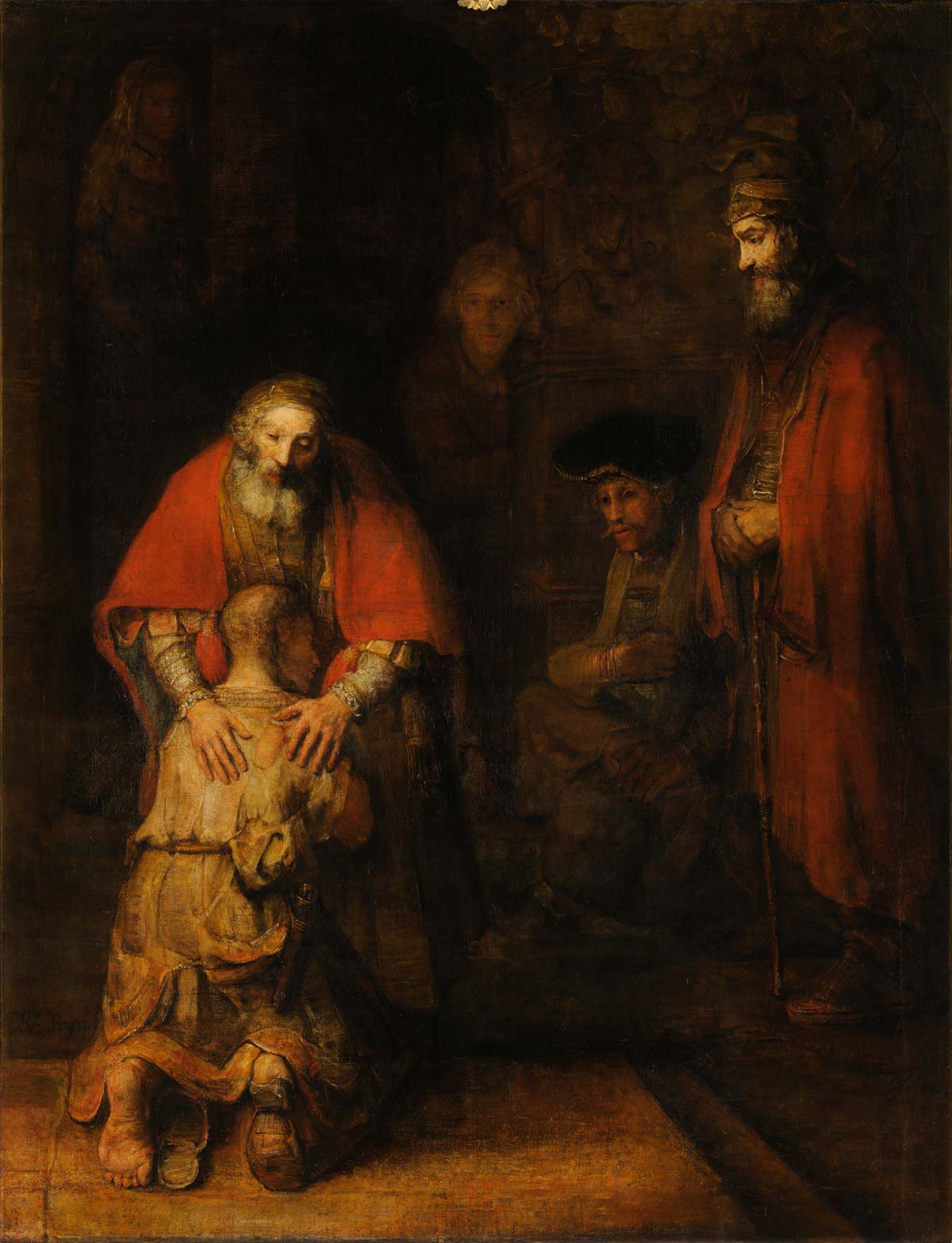
La fe cristiana plantea a Dios como Padre. En la actualidad, puede que se nos dificulte pensar a Dios como Padre por tres razones según Ángel Cordovilla Pérez:
Según Freud, el hombre siente la necesidad de matar al padre para liberarse definitivamente de lo que representa como autoridad opresora e infantilizante.
Según la concepción de algunos movimientos feministas, la figura de un Dios Padre sólo replica las estructuras patriarcales injustas que han oprimido a las mujeres a lo largo de la historia.
Según la modernidad, hemos construido nuestras sociedades con una pasión por la libertad buscando la emancipación del ser humano y este esfuerzo necesariamente choca con la idea de la paternidad divina como algo limitante que mengua la libertad del ser humano.
Estas críticas sirven a la teología cristiana para pensar qué clase de Padre es Dios y cómo interactúa filialmente con sus hijos. Sin embargo, aparece en nuestras sociedades una nostalgia y nuevas búsquedas del padre perdido. Es un tema recurrente en la literatura, el cine y hasta se puede palpar esta nostalgia en la música popular.
Según Cordovilla, «los cristianos que confesamos la fe en Dios Padre [debemos ser] conscientes de que la buena noticia de la paternidad de Dios es escuchada por un hombre y una cultura que tienen una vivencia previa de la paternidad, y que esta está en crisis». A pesar de las complicaciones con nuestros padres, ejemplares o ausentes, o peor, abusivos y opresores, la buena noticia de Dios como Padre se dirige a un anhelo que tenemos muchas veces reprimido.
¿Le daremos la oportunidad a Dios para mostrarse como el Padre que intuitivamente sabemos que necesitamos y tanto deseamos?
Fuente: Gabino Uríbarri, Pedro Rodríguez Panizo, Ángel Cordovilla Pérez y Nurya Martínez Gayol. (2013). El corazón de la fe. Breve explicación del credo. 2da ed. Santander: Editorial Sal Terrae.
Arte: El retorno del hijo pródigo de Rembrandt (cf. Lucas 15).
A mí me parece que todos somos peregrinos en esta tierra. Cada ser humano anda buscando el sentido de la vida, en palabras de los antiguos filósofos, la buena vida.
Podemos tener diferentes mapas, diferentes visiones del mundo, pero todos estamos en camino hacia algo o alguien. Dependiendo de nuestro destino, vamos a vivir el viaje de una u otra manera.
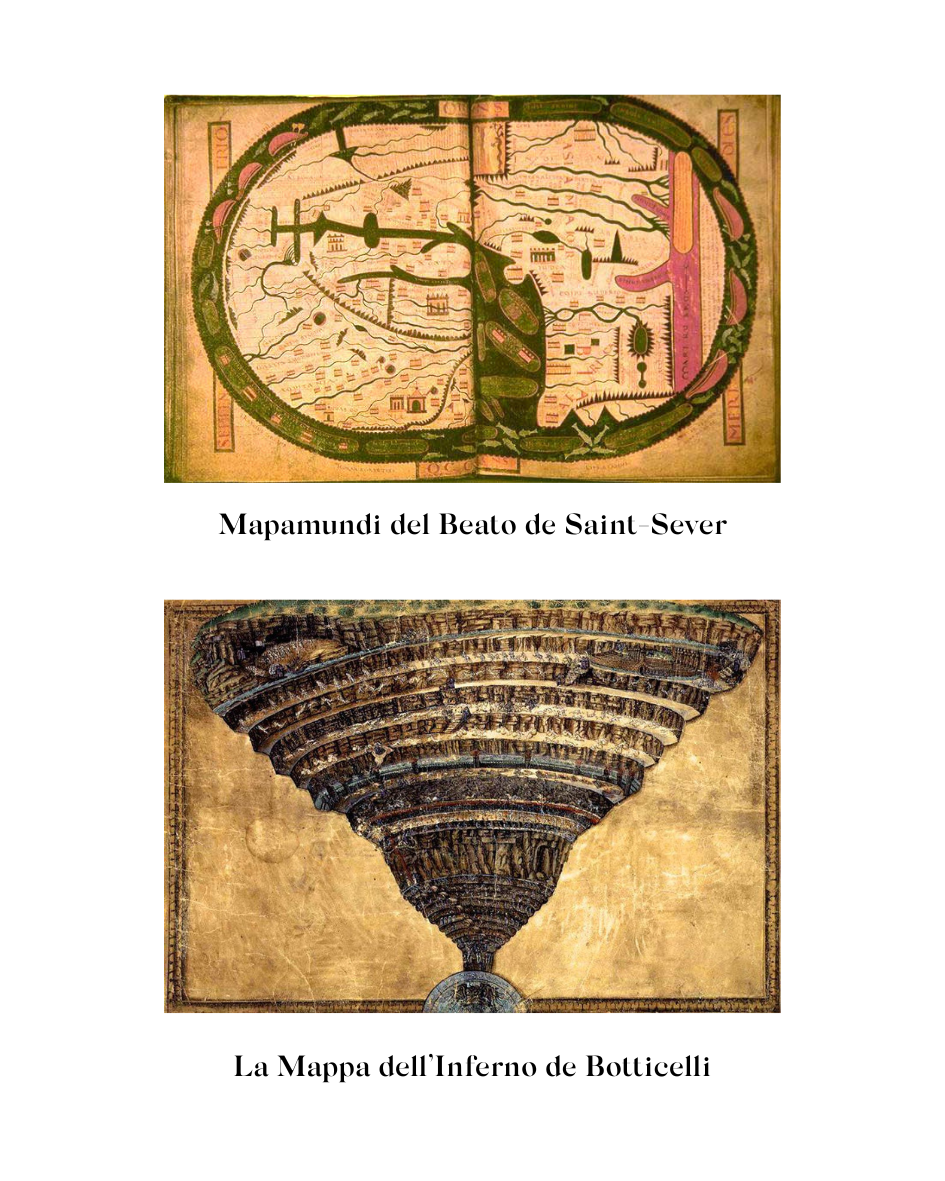
El mapamundi del Beato de Saint Sever o incluso el Mapa del infierno de Botticelli que representa el infierno en la obra de Dante, ilustran, de alguna manera, una concepción del mundo material y espiritual.
El cristianismo plantea que nosotros como peregrinos viajamos hacia Dios. Él es nuestro destino final. Él es quien da sentido a todo lo que vivimos y sufrimos. Es quien orienta el rumbo de nuestras vidas y quien nos da alegría y satisfacción hasta que lleguemos al gozo inefable por haberle visto cara a cara.
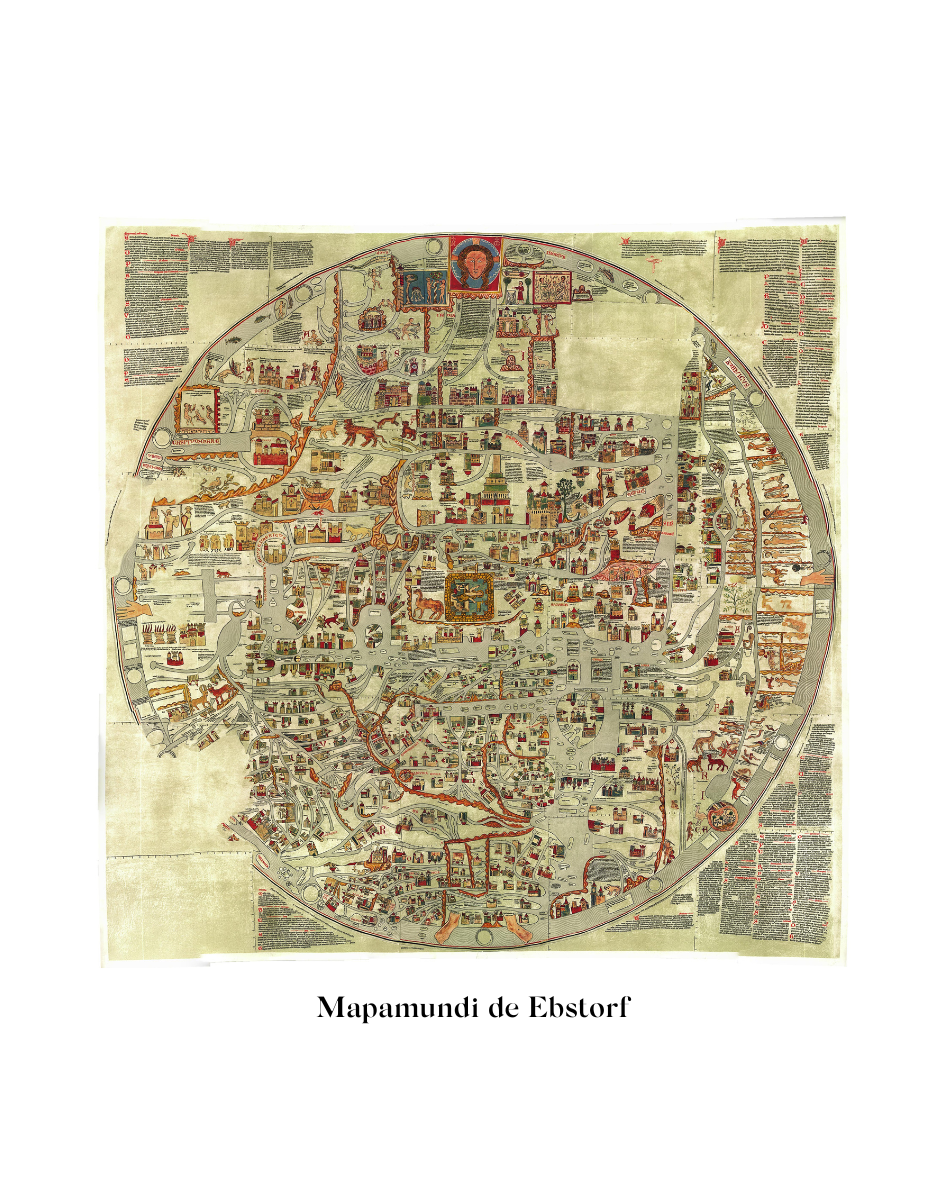
El mapamundi de Ebstorf muestra a Jesús abrazando el mundo. Me parece que ilustra perfectamente el alance cósmico de la obra de Jesús. No le interesa apenas salvar almas de individuos. Le interesa redimir todo lo que existe.
Cada uno tiene que preguntarse, ¿cuál es el mejor mapa y cuál es mi destino?
Raíces es un espacio para hacer amigos, cenar y entablar conversaciones profundas acerca de las preguntas últimas de la vida. Vamos a intentar llegar a la raíz de quiénes somos y qué significa ser humano.
En el primer encuentro, leímos y reflexionamos acerca de la siguiente poesía:
Utopía Wisława Szymborska
Isla en la que todo se aclara. Ahí se puede arribar a pruebas firmes.
No hay más caminos que aquellos de llegada. Las zarzas se doblan por el peso de las respuestas.
Crece ahí el árbol de la Suposición Correcta con sus ramas eternamente desenredadas.
Y deslumbrantemente recto el árbol de la Comprensión junto a una fuente llamada Ah, De Eso Se Trata.
Cuanto más denso se hace el bosque, más amplio aparece el Valle de la Evidencia.
Si hay alguna duda, el viento la disipa.
El eco de ninguna voz toma la palabra y aclara con entusiasmo los secretos de los mundos.
A la derecha, la caverna en la que se encuentra el sentido.
A la izquierda, el lago de la Convicción Profunda. Del fondo se desprende la verdad y sale sin más a la superficie.
Domina el valle la Seguridad inquebrantable. Desde su cima se extiende la Esencia de las Cosas.
A pesar de sus encantos, la isla está desierta, y las pequeñas huellas de pasos que se ven en sus orillas se dirigen hacia el mar sin excepción.
Como si de ahí solamente se saliera para hundirse irremediablemente en el abismo.
En una vida inconcebible.
Wisława Szymborska. Poesía no completa. 2da ed. Gerardo Beltrán y Abel A. Murcia, trad. Ciudad de México: Fondo de Cultura Económica, 2008.
¿Cuáles son las utopías que buscamos? ¿Cuáles son las historias que dan sentido a nuestra existencia? ¿Cuáles son las historias en que depositamos nuestra esperanza esperando recibir algún tipo de salvación?
Hospitality is a Christian virtue that changed the world forever. It was one of the virtues that played a major role in the expansion of the early church in the Roman Empire. Pagan culture was anything but hospitable, it was meritocratic (merit based), competitive and utilitarian. It was because the early Christians saw in the other, the stranger, the foreigner the image of God, that the Gospel spread so quickly. Even Christians who were Roman citizens prized their heavenly citizenship more and were led to show compassion and love to those who were displaced by violence and those who relocated looking for a better future. (For a better understanding of hospitality in the first few centuries of the early church, see Destroyer of the Gods: Early Christian Distinctiveness in the Roman World by Larry W. Hurtado.)
I too have been an immigrant in two different countries. Being an immigrant can be an exciting and terrifying experience. Border controls, at land or at an airport are nerve wracking experiences, even if you have all your documents in order. I have been looked down upon. I have been accused of falsifying documents and impersonating a citizen of my passport country. I have even been accused of working for the CIA. All of this stems from the unavoidable fact that I am different, I am from somewhere else. For the majority of people with whom I live my daily life, I did and still do belong. But for a few fellow humans and greedy officers of the law, I do not belong.
Belonging is one of our deepest desires. The whole Christian Gospel says, “you belong to Me!”. In Christ, we discover God as our Father and fellow believers as our brothers and sisters. We are invited into God’s family. When we question people’s right to belong, when we question their status in the human family, we are attacking their most vulnerable point.
For Christians, even for those who confuse their earthly citizenship with their heavenly one, all of God’s good green earth belongs to Him! Every piece of land, before humans measured it and sold it to the highest bidder, belongs to God the Creator. Every human being has been created in God’s image. How, then, can we say that humans do not belong on this earth?
God is the Host of all creation. He has generously welcomed us to His world. We, as fellow regents of His creation are also to welcome others. While governments, who do not seek first His Kingdom and His righteousness, may make laws about entry and permanence in a bordered space, as God’s children we know that no human is illegal and that all human beings in every place deserves to be treated with dignity and respect. If we are called to love our enemies, how much more should we care for the vulnerable migrants of our world displaced by violence, failed states and economic terror!
Judeo-Christian ethics are borne out of the nature of God and out of the story of redemption that is being played out still today. Exodus 22:21 says, You shall not wrong or oppress a resident alien, for you were aliens in the land of Egypt. Once again in 23:9, it says, You shall not oppress a resident alien; you know the heart of an alien, for you were aliens in the land of Egypt. In our spiritual DNA there is a past when we were slaves and immigrants in foreign lands. This experience should forever change God’s people and aid us in being loving and compassionate with those who share a part of our story.
(For those who are concerned that these Old Testament passages do not apply to the Christians because they are a part of the Torah, the Law, and not a part of the New Testament, please be advised that Jesus usually radicalized the ethical demands of the Law instead of laxing them. For more information about Christian ethics in the Hebrew Bible, see Old Testament Ethics for the People of God by Christopher J. H. Wright.)
For Jesus, the greatest commands are Love God and Love Others. The second command is not qualified by gender, race, or origin. We are called to love others and to mourn injustices in our world. This life is not a competition to get ahead at the expense of others. (This is pagan religion, not Christianity.) We are called to embody God’s hospitality of all humans on His good earth.
Please, do not celebrate the detention and deportation of immigrants. Do not celebrate family separation at the border or in the country. Do not celebrate the violation of sacred space now that churches are no longer a place of refuge for immigrants. And do not celebrate ICE agents going into schools, place of learning and belonging, in order to terrorize children and families.
What can we do? Lament. We can lament that many countries are too poor to sustain a good quality of life for everyone. We can lament that there are not equal opportunities for all people all around the world. We can lament the broken immigration system. We can lament the exploitation of immigrants in the U.S. and around the world. We can lament the hunger, the violence, and the injustice that forces people to migrate far from home in search for a better life.
We can lament. And we can love. Let’s leave the vitriol, the disdain and the celebration of separated families to the pagans. We’ve got a lot of work to do.
For the Lord your God is God of gods and Lord of lords, the great God, mighty and awesome, who is not partial and takes no bribe, who executes justice for the orphan and the widow, and who loves the strangers, providing them food and clothing. You shall also love the stranger, for you were strangers in the land of Egypt. You shall fear the Lord your God; him you shall serve; to him you shall hold fast; and by his name you shall swear. He is your praise; he is your God who has done for you these great and awesome things that your own eyes have seen. Your ancestors went down to Egypt seventy persons, and now the Lord your God has made you as numerous as the stars in heaven(Deuteronomy 10:17-22).
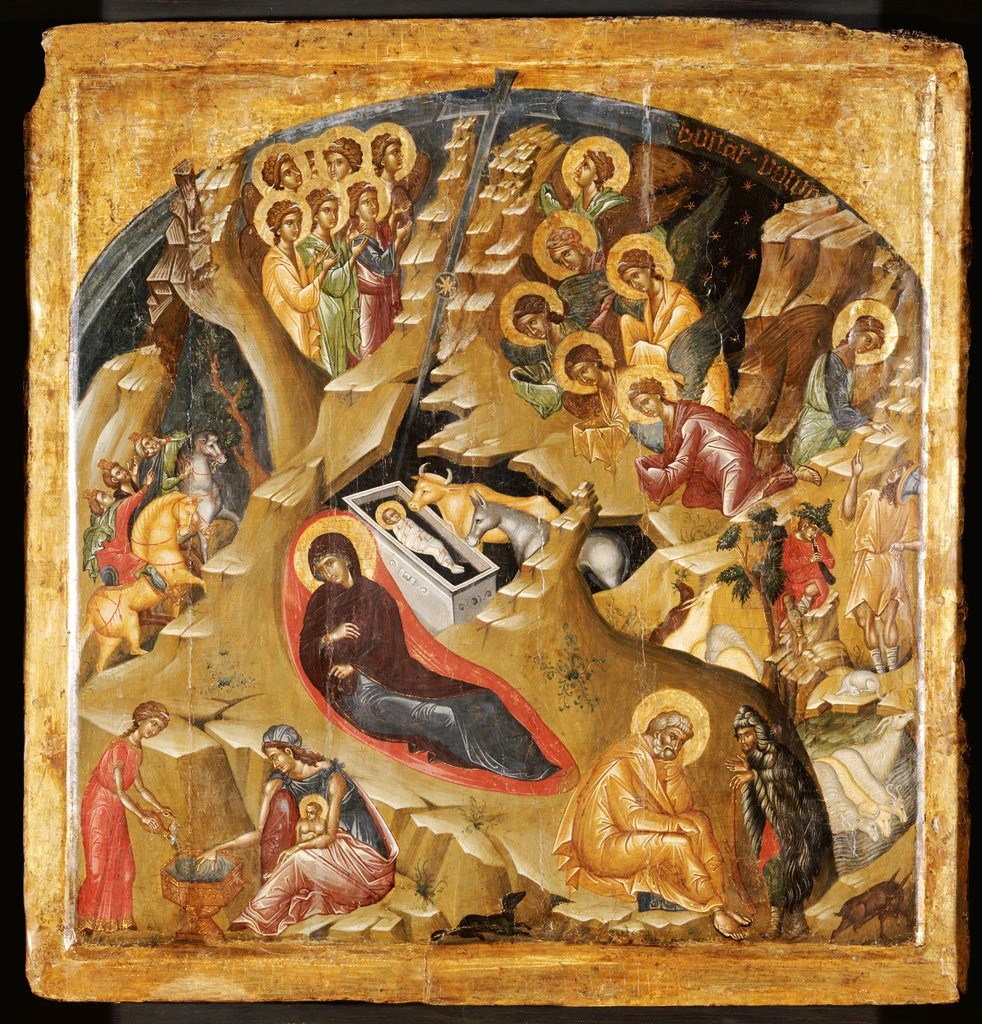
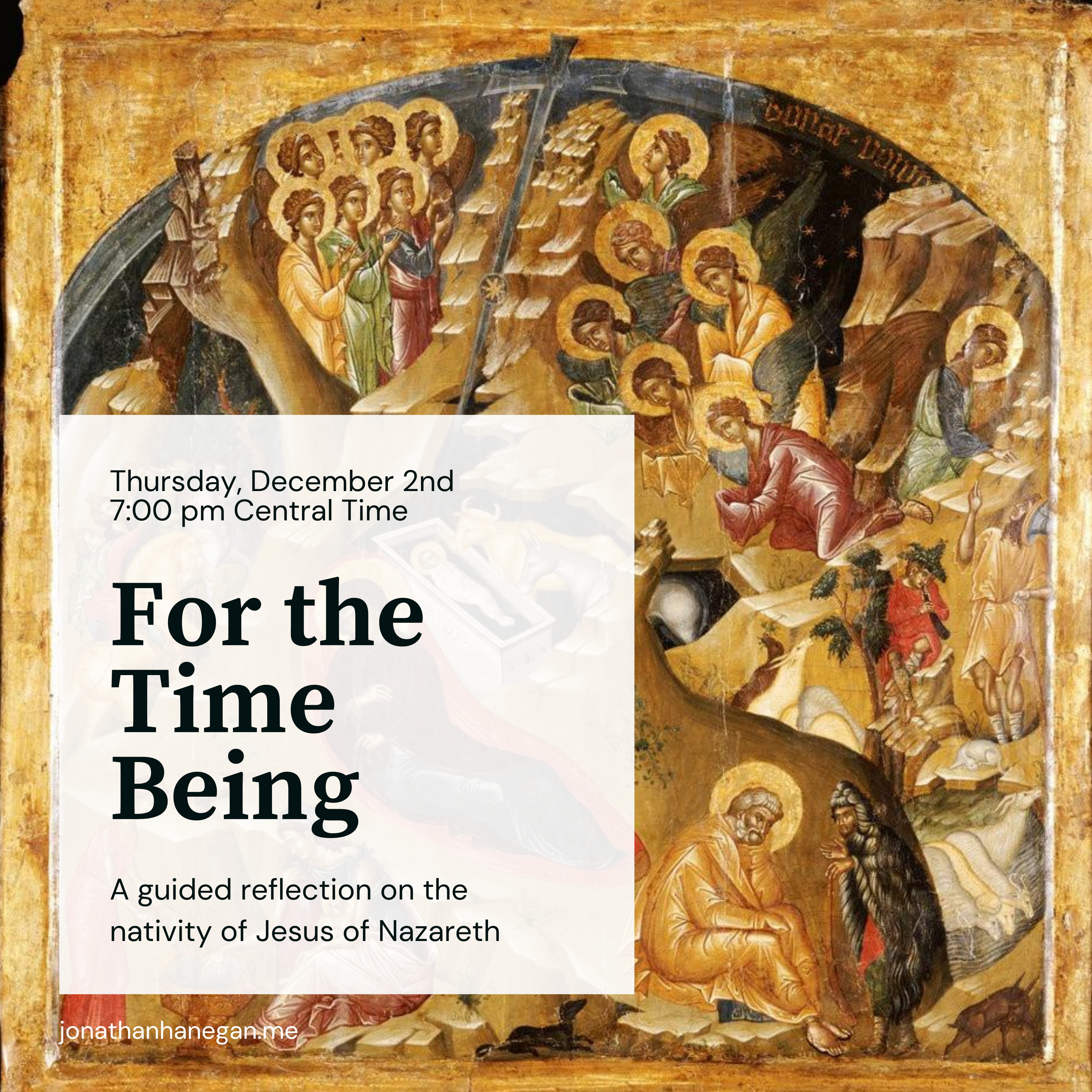
I would like to invite friends and family to join me for a guided reflection on the birth narratives of Jesus of Nazareth via Zoom on Thursday, December 2nd at 7:00-8:30 pm Central Time.
Dear friend, since I cannot embrace you in person, please allow me to share some words from the Apostle Paul and a poem by St Ephrem that reminds me of the hope we share in Christ. – Jonathan
“Therefore, my beloved brothers and sisters, be steadfast, immovable, always abounding in the work of the Lord, knowing that in the Lord your labor is not in vain.” – 1 Corinthians 15:58
Hymns of the Resurrection, No. 1 Saint Ephrem the Syrian
The Lamb has come for us from the House of David, The Priest and Pontiff from Abraham; He became for us both Lamb and Pontiff, giving His body for sacrifice, His blood for sprinkling.[1] Blessed in His accomplishment!
Refrain: Blessed is Your rising!
The Shepherd of all flew down in search of Adam, the sheep that had strayed; on His shoulders He carried him[2] taking him up: he was an offering for the Lord of the flock. Blessed in His descent!
He sprinkled dew and life-giving rain on Mary, the thirsty earth.[3] Like a seed of wheat He fell again to Sheol, to spring up as a whole sheaf,[4] as the new Bread.[5] Blessed is His offering!
Knowledge of Him chased error away from mankind who had become lost; the Evil One was led astray by Him and was confounded. Knowledge of Him poured out all kinds of wisdom upon the nations. Blessed in His fountain!
From on high did Power descend to us, from a womb did Hope shine out for us, from the grave Salvation appeared for us, and on the right hand the King sits for us. Blessed in His glory!
From on high He flowed like a river, from Mary He stemmed as from a root,[6] from the cross He descended as fruit, as the first-fruit He ascended to heaven.[7] Blessed in His will!
The Word came forth from the Father’s bosom, He put on the body in another bosom; from one bosom to another did He proceed, and chaste bosoms are filled with Him. Blessed is He who dwells within us!
From on high He came down as Lord, from the womb He came forth as a servant. Death knelt before Him in Sheol, and Life worshipped Him in His resurrection. Blessed in His victory!
Mary carried Him as a child, the priest carried Him as an offering,[8] the cross carried Him as one slain, heaven carried Him as God. Praise to His Father!
From every side He stretched out and gave healing and promises: children ran to His healings, the discerning rain to His promises. Blessed in His appearance!
From the fish’s mouth He gave a coin[9] whose imprint was temporal, whose currency passing;[10] from His own mouth He gave a new imprint, giving us the new covenant. Blessed is its giver!
From God is His godhead, from mortals His manhood, from Melkizedek His priesthood,[11] from David’s line His kingship. Blessed in His combining them!
He joined the gusts at the wedding-feast, He joined the fasters in the temptation, He joined the watchers in toil, He was a teaching in the sanctuary. Blessed in His instruction!
He did not shrink from the unclean, He did not turn away from sinners, in the sincere He greatly delighted, at the simple He greatly rejoiced. Blessed in His teaching!
He did not hold back His footsteps from the sick or His words from the simple; He extended His descent to the lowly, and His ascension to the highest. Blessed in His sender!
His birth gives us purification, His baptism gives us forgiveness, His death is life to us, His ascension is our exaltation. How we should thank Him!
By the greedy He was considered a glutton,[12] but by those who know, the Provider of all; by the drunk He was considered a drinker, but by the discerning, the Giver of drink to all. Blessed in His foresight!
To Caiaphas His conception was a scandal, but to Gabriel His birth was glorious; to the unbeliever His ascension is a source for suspicion, but to His disciples His exaltation is a source of wonder. Blessed in His discernment!
With His begetter His birth is certain, but to the investigator it is filled with difficulty; to supernal beings its truth is crystal clear, but to those below a subject of enquiry and hesitation – yet one which cannot be investigated!
By the Evil One He was tempted, by the Jewish people He was questioned, by Herod He was interrogated: He spurned him with silence since he wished to probe Him.[13] Blessed is His Begetter!
They thought He was one of those baptized in the Jordan, they accounted Him amongst those that sleep while at sea,[14] they hung Him like a slain man on the cross, they laid Him like a corpse in the grave. Blessed is His humiliation!
Whom have we, Lord, like You – the Great One who became small, the Wakeful who slept, the Pure One who was baptized, the Living One who died, the King who abased himself to ensure honour for all! Blessed is Your honour!
Translation by Sebastian Brock, The Harp of the Spirit: Poems of Saint Ephrem the Syrian. 3rd. ed. Cambridge: Aquila Books, UK., 2013.
Cuando leemos una novela o vemos una película, se nos hace más fácil entender la historia cuando descubrimos quién es el protagonista. Sabemos que en la mayoría de las historias hay una trama principal y luego pequeñas historias que se entrelazan con la historia principal. Cuando leemos la Biblia, es importante que sepamos reconocer cuál es la trama principal y quién es el protagonista de la historia.
La Biblia es una gran narrativa que habla de Dios. Sí, Dios es el protagonista de la Biblia. Y ¿cuál es la trama principal de la Biblia? La trama principal es la misión de Dios. ¿Cuál es su misión? Su misión es redimir todo lo que existe.
Lo genial de la Biblia es que no nos explica la vida humana y la vida de Dios a través de argumentos abstractos y difíciles de entender sino a través de muchas historias que forman parte de una gran historia.
Esta historia nos cuenta de un Dios trino, un Dios que es Padre, Hijo y Espíritu Santo. Este Dios gozaba del amor perfecto y la comunión entre sus tres personas. Tanto así, que le nació crear un mundo para poder compartir su vida. Dios, anfitrión de la creación, hizo un lugar hermosísimo para que pudiéramos vivir plenamente sobre la tierra y en comunión con Él. Nos dio todo lo que necesitábamos para vivir: comida, compañía y el árbol de la vida.
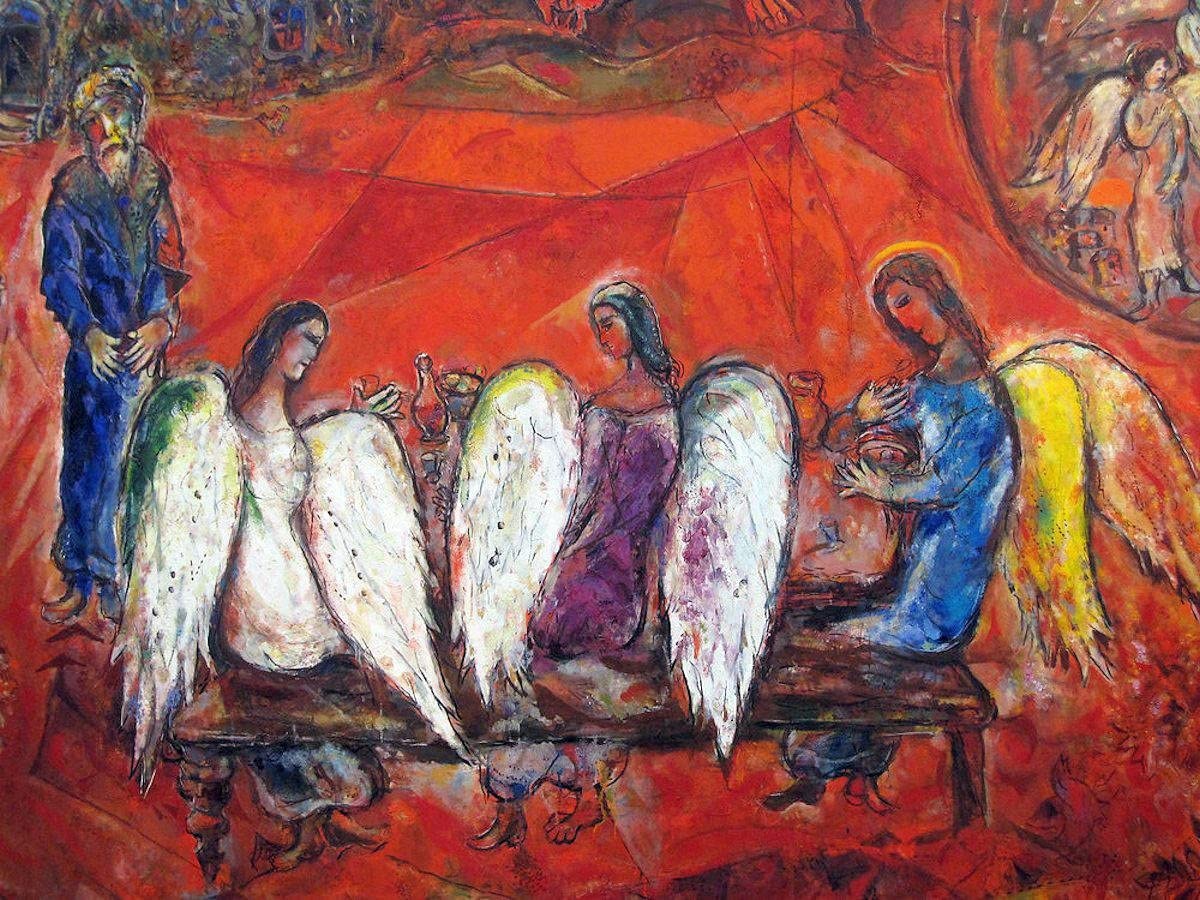
Dios visita a Abraham, Marc Chagall
Adán y Eva fueron engañados por la serpiente y decidieron tratar de realizarse al margen de Dios y de la vocación que Él les había dado: ser mayordomos generosos y compasivos con la creación y con el prójimo. A pesar de su rebeldía, Dios los buscó para seguir insistiendo en que la única manera de ser plenamente humanos y vivir su mejor vida posible, sería viviendo en comunión con Él. El resto del Antiguo Testamento habla de este baile entre Dios y su pueblo. Dios insiste con fidelidad y misericordia en la importancia de la relación mientras Israel a veces se pierde y sigue siendo rebelde.
Y un día en Palestina, llegó Dios de una manera sorpresiva. El Dios Creador del universo vino a la tierra en forma de un bebé indefenso, llamado Jesús. Tanto amó Dios al mundo que envió a Jesús para que supiéramos cuánto nos ama Dios y cuán lejos nos habíamos extraviado de Él y de su deseo para nosotros. Jesús vuelve como Rey e inaugura su reino acá en la tierra.
Jesús nos enseña a ser plenamente humanos sin descuidar la vocación que Dios nos dio luego de la creación del mundo. Nos enseñó que Él mismo es el camino, la verdad y la vida. Nos enseñó que la vida abundante, la verdadera felicidad, se encuentra en comunión con nuestro Creador. Y nos enseñó que esta comunión que nos sana y nos salva se nota en nuestro amor por el prójimo ya que nadie puede amar a Dios sin amar al prójimo. Jesús nos enseñó quién es Dios muriendo por nosotros en la cruz. Nos enseñó el poder de Dios cuando fue levantado de entre los muertos para no volver a morir jamás.
Jesús vivía, enseñaba y nos mostraba a Dios. Señalaba a Dios para que nosotros supiéramos dar testimonio de Dios, para que supiéramos continuar su ministerio acá en la tierra. Esperamos con ansias la segunda venida de Jesús cuando vendrá a juzgar a los vivos y a los muertos.
No sólo anhelamos su venida, también anhelamos juntamente con la creación nuestra redención porque Dios no se deshace de lo que se corrompe, de lo que se daña – Él lo redime, lo sana, lo salva. Por eso, no sólo esperamos nuestra salvación, pero también la salvación del mundo creado por Dios. Desde que profetizó Isaías antes del nacimiento de Jesús, esperamos los nuevos cielos y la nueva tierra – la nueva creación.
Vamos a resucitar con cuerpos glorificados, cuerpos transformados. Viviremos eternamente con Dios. De hecho, desde el día que nos bautizamos, ya comienza la vida eterna con Dios. ¡Celebremos la gran historia de Dios! ¡Seamos también parte del elenco de la historia de Dios! ¡Colaboremos con Dios en la redención de todo lo que existe!
Surely he has borne our griefs and carried our sorrows; yet we esteemed him stricken, smitten by God, and afflicted. But he was wounded for our transgressions, he was bruised for our iniquities; upon him was the chastisement that made us whole, and with his stripes we are healed. All we like sheep have gone astray; we have turned every one to his own way; and the Lord has laid on him the iniquity of us all.
Isaiah 53:4-6 RSV
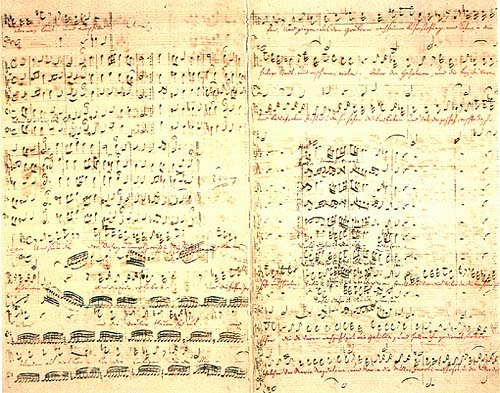
Fair copy in Bach’s own hand of the Passion of St Matthew
This last year I suggested that we might accompany our Advent reflections with Handel’s Messiah. In this same vein, I would like to suggest that Bach’s Passion of St Matthew can help us to think more deeply about the the passion of our Lord Jesus.
Alan E. Lewis in his book, Between Cross & Resurrection notes that Christians pass far too quickly from the crucifixion on Friday to the resurrection on Sunday. We do not give Holy Saturday its due. I would say that most Christians today (myself included) do not spend enough time meditating on the end of Christ’s earthly life.
A slow reading of the canonical Gospels will most certainly aid us. In addition to the reading of Scriptures, the contemplation of arte sacro or liturgical music can help us meditate upon the meaning of the events that brought us salvation through the person and work of Christ.
Here is an excerpt from the Passion of St Matthew by Bach:
Der Heiland fällt vor seinem Vater nieder; Dadurch erhebt er sich und alle Von unserm Falle Hinauf zu Gottes Gnade wieder. Er ist bereit, Den Kelch, des Todes Bitterkeit Zu trinken, In welchen Sünden dieser Welt Gegossen sind und häßlich stinken, Weil es dem lieben Gott gefällt.
The Savior falls down before his father; Thereby he raises me and all people From our fall Upward to Godís grace again. He is ready The cup of death’s bitterness To drink, Wherein the sins of this world Are poured and stink odiously, Because it pleases dear God.

 Jonathan Hanegan